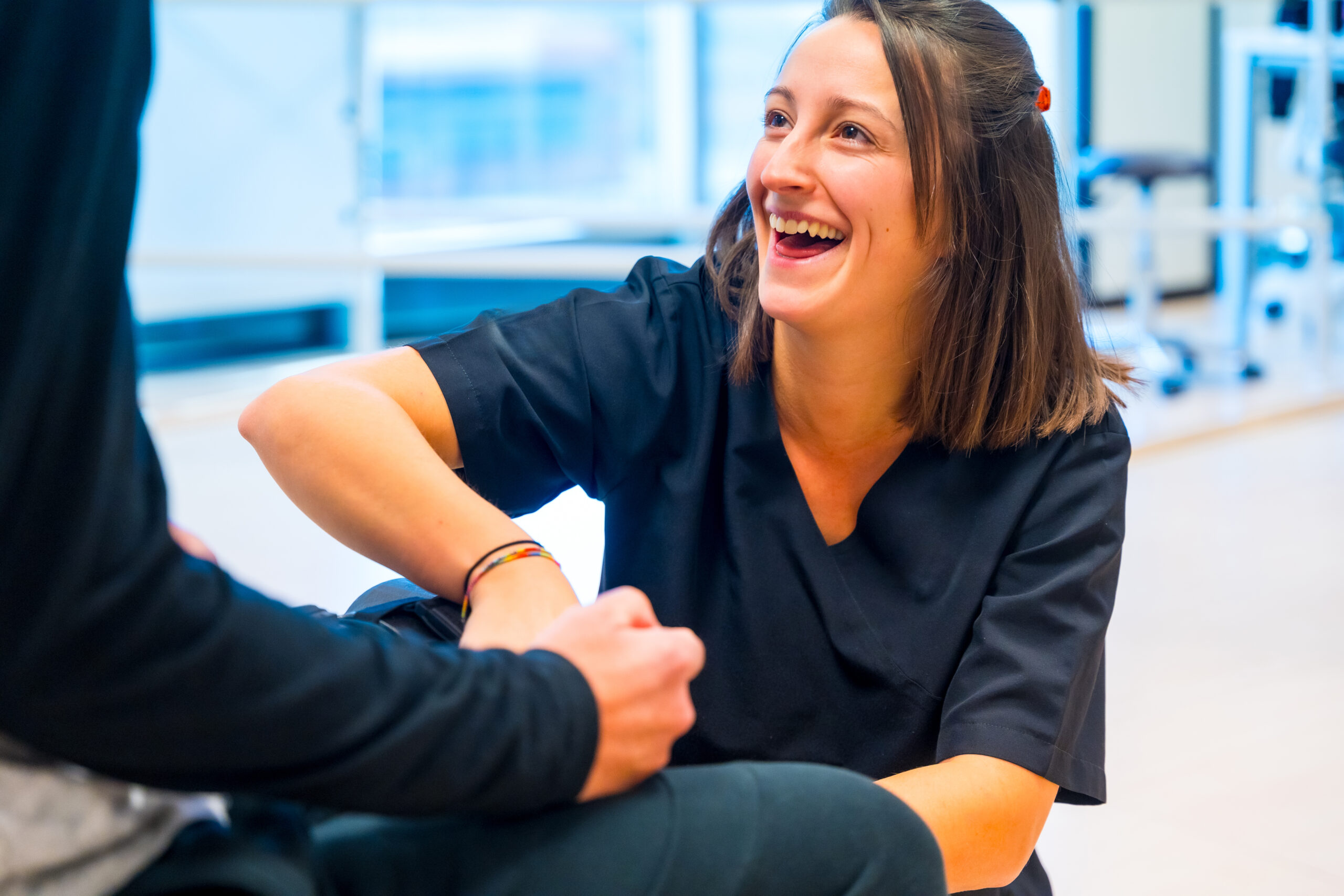
Community physiotherapy in 2026 – Empowering independence
Four years ago, our KEO blog ‘More than Exercise: Physiotherapy in the Community Setting’ explored the essential role that physiotherapists play within the disability sector. Since then, the NDIS landscape has changed significantly, though fundamentally our role as physios remains the same – enhancing our participants’ functional ability by targeting mobility and physical capacity, in turn improving their performance in meaningful tasks.
New NDIS plans in 2026 have seen a reduction in allied health funding allocation across the board when participants’ plans are reviewed. This is particularly notable when supporting participants with psychosocial, neurodevelopmental (including autism) and intellectual disability which are seen by the NDIA as not primarily physical in nature and therefore not amendable to physiotherapy input. It is becoming increasingly difficult for participants to access physiotherapy despite evidence provided as the NDIS moves to a more rigid ‘stated supports’ model.
These recent changes in NDIS funding and the scope of service provision have necessitated a shift in our mindsets, including a further push toward a capacity building framework. Having less opportunity for regular therapies means that we need to be targeted in our interventions, ensuring that each therapy session works toward building skills with our participants and their caregivers (which could include family members or formal support workers) in facilitating our recommendations between sessions.
Strengthening therapy through collaboration
In this approach, we provide support through less frequent (though more in-depth) review sessions where we evaluate our participants’ progress and modify their program according to their evolving needs and priorities. That way we can ensure we are always challenging our participants at their highest functional level.
Our role as educators has therefore never been more important – if we can help these support networks feel confident in delivering therapy programs, and our participants feel encouraged to participate in therapy regularly, then we have achieved our aim of empowering independence. This helps ensure we are fulfilling our role as facilitators, guiding – rather than directing – our clients’ therapy process. Our participants know what works best for them and we must make sure that their needs and preferences are placed front and centre when developing a program.
2026 provides our therapists an exciting opportunity to evolve in our approach to practice and learn new skills, in turn providing best quality support to our participants. Here are some of the areas that KEO physiotherapists support our clients:
Engagement in inter-disciplinary practice
Physiotherapists work collaboratively with other members of the allied health team to achieve best practice outcomes for our clients. This may look like liaising with speech therapists around optimal communication strategies, completing complex seating assessments alongside OTs and facilitating equipment prescription in collaboration with our assistive technology specialists.
Addressing barriers to exercise/activity participation
Various factors can influence one’s willingness to participate in exercise – motivation, past experiences, self-efficacy and their attitudes and beliefs around physical activity. Our physiotherapists explore these in an individualised manner that is sensitive to the individual’s needs and preferences. We can then tailor a program that incorporates their interests, with consideration given to how it can fit within their daily routine and use a motivational interviewing (MI) framework to improve engagement.
Chronic pain management
Chronic pain is a hallmark feature of many presentations we service and managing it appropriately is essential to overcoming barriers to participation. Additionally, individuals with certain diagnoses (including psychosocial disability) experience pain more profoundly than neurotypical individuals due to altered processing of painful stimuli (Failde et al., 2013). Physiotherapists perform robust assessments to better understand one’s pain presentation and develop strategies through pain neuroscience education (PNE) to reshape individuals’ perception of pain, helping restore safe movement.
Balance and falls intervention
Falls are a leading cause of hospitalisation and injury in the disability population and can have profound impacts on one’s confidence in mobility (Bulsara et al., 2019). Physiotherapists conduct comprehensive falls assessments, providing relevant recommendations to reduce falls risk which include environmental adaptations, gait aid prescription or exercises that challenge balance in a safe and controlled manner.
Creativity in therapy selection
Being mobile clinicians, we travel light and do not have a mobile gym at our disposal! Instead, our therapists think outside the box to utilise what is readily available within the client’s environment – this can include using household items for strength training, accessing the body weight gym at the neighbourhood park or local playground for paediatric clients.
Specialty areas
KEO physiotherapists have undergone further training and are experienced in several specialised areas of practice, including women’s health, dry needling, aquatic exercise, neurological therapy and running gait. Our clinicians undertake Lifelong Learning as a commitment to KEO’s core values and find opportunities to innovate in their practice.
Support for older adults:
Our therapists’ caseloads involve a mixture of NDIS participants and Support At Home (formerly Home Care Package) clients. November 2025 brought about the Support At Home program, designed to empower older individuals to stay in their home and reduce burden on the aged care sector. Our therapists continue to support elderly Australians in a range of environments, including within their own home, supported residential care, community settings (gym, pool) and through individualised one-to-one visits or group exercise classes.
Our KEO therapists have demonstrated incredible resilience in the face of recent NDIS and aged care sector changes, and while further change is inevitable, we will continue to control the controllables and commit to providing the best care possible for our clients.
References
Failde, I., Dueñas, M., Agüera-Ortíz, L. et al. Factors associated with chronic pain in patients with bipolar depression: a cross-sectional study. BMC Psychiatry 13(112). https://doi.org/10.1186/1471-244X-13-112
Bulsara, M., Ho, P., Downs, J., Patman, S., Bulsara, C., & Hill, A-M. (2019). Incidence and prevalence of falls in adults with intellectual disability living in the community: a systematic review. JBI, 17(3), 390-413. doi: 10.11124/JBISRIR-2017-003798
About the author
Tristan is a Clinical Excellence Lead and Physiotherapist at KEO. With over 9 years of experience in clinical practice, Tristan is responsible for supporting a diverse community caseload, including psychosocial participants, the elderly, and neurological clients.
Tristan appreciates being part of a robust interdisciplinary team and loves sharing education and learning with his fellow team members. His approach to practice is creative and collaborative, enabling him and his KEO colleagues to work effectively together towards the best outcomes.